
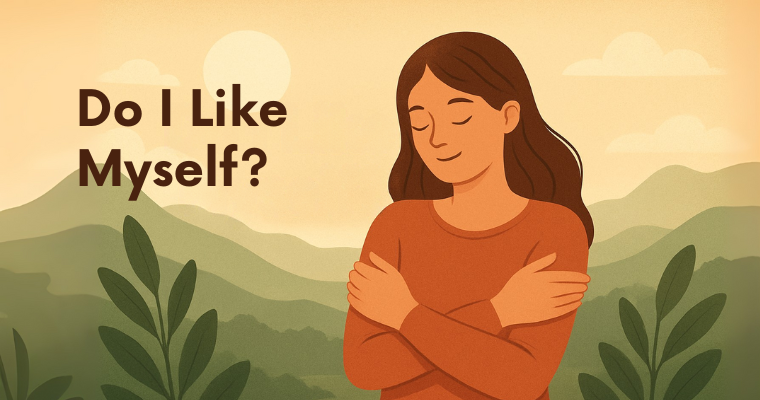
At some time, everybody pauses and wonders: Do I like myself? Simple as this may seem, it is a very powerful question that could transform your life. Sometimes it is a fleeting thought; other times, it becomes an inner mirror with which you measure self-worth, whether you feel self-love, and some vague notion of identity. Most of the time, this question is the opening step to liberate the mind, heal, and grow into the very path that stands between you and your authentic self.
Table of Contents
ToggleWhy Does Liking Yourself First Imply Self-Consciousness?
Everyone becomes conscious after facing their truth honestly. By asking themselves the question, Do I like myself?, they open the door to deeper introspection. This question lends you the clarity of how you see yourself outside achievements, appearances, or other forms of external validation.
Once you start recognizing your strengths and weaknesses without judgment, you have entered into the realm of acceptance itself. This is where tools like Self-Discovery Retreats come in, removing distractions and providing you with the time and space to reconnect with the core self.
The Connection Between Self-Love and Inner Freedom
Supposedly, liking oneself and loving oneself are deeply interconnected. Inner freedom is born when you cease granting others the right to validate your experiences and accept the worthiness of your own.
When you love yourself, you become empowered to:
- Cast away negative inner dialogues.
- Create boundaries without guilt.
- Celebrate your uniqueness.
- Build resilience against criticism.
Without self-love, freedom seems far away. With self-love, you gain courage to be real and happy.
Common Causes for People Having Trouble Liking Themselves
It’s not always easy to answer Do I like myself? Some of the deeply embedded causes include:
- Negative self-talk – Constant criticism melts away self-confidence.
- Comparison – Measuring your worth against others’ achievements.
- Past mistakes – Instead of learning from them, you hold grudges.
- Lack of self-acceptance – Unable to love imperfection.
Such struggles are normal, but do not determine your value. Identifying them is the beginning of healing.
How to Answer the Question, “Do I Like Myself?” Honestly
Longevity is the basis for this journey. To answer the question truthfully, ask:
- Journaling about your feelings toward yourself.
- Ask, “Would I treat a friend the way I treat myself?”
- Become aware of those situations when pride fills you relative to yourself and those moments when self-criticism peaks.
These exercises provide clarity to your self-reflections. Sometimes it is Self-Discovery Retreats or a set of guided workshops that might give some deeper insight and complementary tools for finding your truth with compassion.
Practical Ways to Build Up Your Self-Image and Self-Worth
Changing perception of oneself is a daily practice; here are some of the ways that have been shown to work:
- Journaling, in which a person writes about ways in which they felt accomplished, things for which they are grateful, and things they learned during the day.
- Affirmations are recitations of positive truths about yourself repeated throughout the day.
- Spiritual self-care practices could include meditation, walks in nature, or mark-your-calendar-for-thankfulness days.
- Healthy boundaries include saying no anytime your energy is at risk.
- Celebrate the little wins by appreciating recognition made for progress, and not for perfection.
These experiences build confidence and nurture respect within oneself.
Mindfulness in Learning to Like Yourself
Mindfulness grounds oneself in the present moment instead of being distracted by regrets or irrational fears. Observing thoughts, well, that is observing oneself without judgment, and would mean seeing oneself clearly.
With mindfulness, you move away from harshly self-critical questioning: Do I like myself? into the realms of self-compassion. Mindfulness anchors to the reality that right now, in this very moment, you are enough.
Why Self-Compassion Is Key to Inner Freedom
At the core of transformation lies self-compassion. When you are kind to yourself, mistakes cease to define you and become growth opportunities.
When applying self-compassion, you:
- Forgive yourself for past choices.
- Accept deficient qualities as human.
- Build resistance such that one can forge ahead courageously.
It is this gentle acceptance that makes one a free being who will act authentically, no longer weighed down by judgment.
FAQs
1. Why is asking “Do I like myself?” important?
Because it opens the door to self-awareness, helping you understand your true feelings, strengths, and insecurities without external validation.
2. What stops people from liking themselves?
Negative self-talk, comparison, past mistakes, and lack of self-acceptance are the most common barriers to self-worth.
3. How can I honestly evaluate if I like myself?
Use journaling, self-reflection, and the question, “Do I treat myself the way I treat a friend?” to gain truthful insights.
4. How can I start improving my self-love and self-worth?
Practice affirmations, mindfulness, spiritual self-care, healthy boundaries, and celebrate small wins daily.
5. Can Self-Discovery Retreats help with self-love?
Yes. These retreats remove distractions and offer guided practices that deepen self-awareness, emotional healing, and inner freedom.
Conclusion
Asking “Do I like myself?” may seem simple, but it holds the power to reshape your life. It is the gateway to self-awareness, self-love, and inner freedom. Through reflection, spiritual self-care practices, and transformative experiences like Self-Discovery Retreats, you can replace self-doubt with self-acceptance.
The journey of liking yourself is not about perfection—it’s about embracing your wholeness. When you learn to genuinely like who you are, you unlock freedom, purpose, and peace.
Also Read:
Finding Inner Freedom Through Self-Awareness