
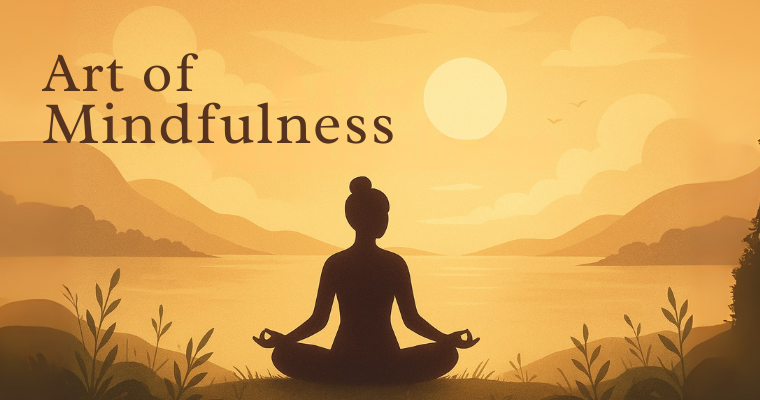
If ever clarity of mind could be one such rare gift in this world of distractions, mindfulness slows down the rush; it ushers in the free flow of thoughts. It is not for relaxation; it is a way of life-a thorough integration of mind, body, and spirit. In any case, by stress or a tough choice or setting inner peace, mindfulness is that gateway to those perceptions that work at a deeper level.
A Simple Definition of the Art of Mindfulness
Being in the present moment, fully in the present with awareness, is Mindfulness: being there for the flow of one’s own thoughts, emotions, and environment. The combination of observation and acceptance of thoughts and feelings distinguishes Mindfulness from passive forms of traditional meditation. Conscious living- that is what mindfulness entails. Conscious breathing, consciously drinking that cup of tea, or consciously eating-these are some of the things mindfulness wants to instill clarity and balance into one’s life.
Table of Contents
ToggleHow Is The Art of Mindfulness Related to Mental Clarity?
When the mind gets messed up, it is negative stress and overthinking that take over. The Art of Mindfulness washes away all that mental chatter and renders a deep silence that is perfectly conducive to decision-making.
Mindfulness is a great way to train the brain to empty itself into the present moment, relieving mental weariness while increasing concentration and productivity. Hence, truly, it is this clarity for which most professional leaders view mindfulness as a mindset for success.
Great Benefits of Practicing the Art of Mindfulness Daily
Practicing mindfulness daily is not just a health fad: It is a lifestyle upgrade. Some major benefits are:
- Reduced Stress & Anxiety – Cortisol is decreased by mindfulness, which also reduces emotional tension.
- Sharpened Focus – Concentration almost always mellows with distractors.
- Emotional Control – Helps with mood swings and tolerance.
- Better Sleep – Relaxing the mind so it can fall asleep properly.
- Spiritual Alignment – A deeper sense of peace supports soul, mind, power, and inner growth.
Mindfulness Practices That Build Your Clarity of Thought
There is no need to meditate for hours when practicing mindfulness. A few practices can be added to your daily life:
- Breathing Awareness – Spend five minutes observing your breath.
- Body Scan Meditation –Slowly notice sensations from head to toe.
- Mindful Journaling – Untether your thoughts from premature clouds of judgment.
- Walking Meditation – Attend to the conscious awareness that arises from holding one’s consciousness with each step and the feeling of movement.
- Gratitude Pause – Contemplate three things for which you are grateful every day.
At-home practitioners can practice mindfulness, and further immersion may be experienced during retreats where sessions are guided.
The Science of Putting Minds into Focus: How It Rewires the Brain
From a neuroscientific point of view, mindfulness has inhibitory control over the prefrontal cortex—the part of the brain that gets involved in focusing, planning, and emotional control. Hence, mindfulness would increase gray matter density in our brain with regular practice, thereby enhancing memory and clarity. Attending Mindfulness Retreats can further strengthen these benefits, offering a structured environment to deepen practice and accelerate mental transformation.
At the same time, there is a decrease in the amygdala-stress center of the brain, with diminished emotional responses. Hence, one may say that mindfulness is restructuring the brain for clarity and resilience.
How to Put Up Your Own Mindfulness Regimen
Start slow if you are a beginner at mindfulness. Here goes a roadmap for beginners:
- Morning Check-In: Take two minutes for mindful breathing at the beginning of the day.
- Midday Reset: Take short breaks for mindfulness and rejuvenation as you work along.
- Evening Reflection: With the other thoughts, write down one mindful observation before bed.
With time, these little actions become strong habits. Many go to retreats to accelerate their mindfulness practice in a good atmosphere.
Beyond Mindfulness and Spirituality Development: Mindfulness for Mental Clarity
Not just clearing the mind, mindfulness is a gateway to spiritual awakening. A skilled practitioner of mindfulness creates space for self-healing, compassion, and higher wisdom. This connection nourishes the soul mind power, allowing alignment with the higher self for purposeful living. Beyond seeking mental clarity, mindfulness is a path to wholeness and inner peace.
FAQs
1. What is the Art of Mindfulness?
Mindfulness is the practice of staying fully present, aware, and engaged in the current moment without judgment.
2. How does mindfulness improve mental clarity?
Mindfulness reduces mental clutter, calms overthinking, and trains the mind to focus better, resulting in clearer thoughts and better decision-making.
3. Can beginners practice mindfulness easily?
Yes. Simple practices like mindful breathing, body scans, and short awareness breaks are enough for beginners to start experiencing clarity.
4. How long does it take for mindfulness to show results?
Most people feel calmer and clearer within a few days of consistent practice, while long-term clarity improves with regular daily routines.
5. Do mindfulness retreats help improve mental clarity faster?
Yes. Retreats offer guided sessions and distraction-free environments that deepen practice, helping clarity and focus develop more quickly.
Conclusion
The Art of Mindfulness is beyond a mere technique-it is a way of life. By virtue of mindful awareness, one lowers stress levels, attains clarity, and begins to awaken to a deeper sense of being. Practiced at home or amidst mindfulness exercises, or even in mindfulness retreats, this art cultivates attention, resilience, and growth of spirit. Being mindful means living a little clearer, calmer, and empowered.
Also Read:
Do I Like Myself? A Journey Toward Inner Freedom