
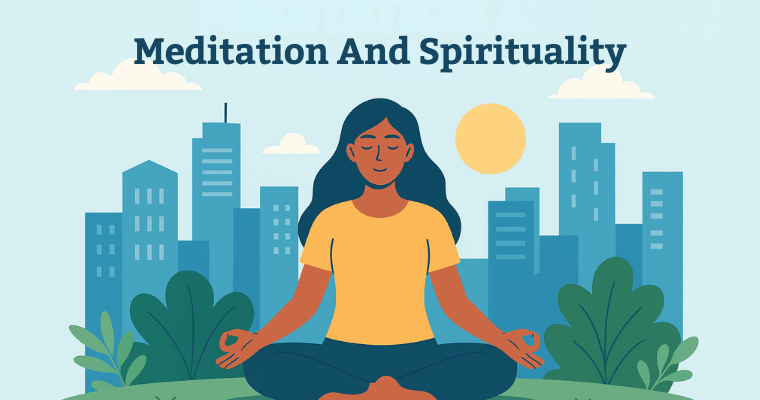
Life in the city runs fast, loaded with noise and demands. Stress, anxiety, and estrangement from the self are common afflictions in cities around the globe. Thus, meditation and spirituality have shed their shackles of luxury and are now ends worthy of sustaining inner peace. They help modern souls of the city tap back into consciousness, build resilience, and sustain spiritual health amidst exterior chaos.
Table of Contents
ToggleWhat Do Meditation and Spiritualism Mean?
Meditation is calming the woozy mind, looking inward, and maintaining presence. Yet, spirituality consists of seeking deeper meaning and purpose beyond material worlds. Together, meditation and spirituality are a great combination, helping people to develop their entire being.
For anyone asking, “What Is Spiritual Wellness?”, it is the conscious equilibrium between mind, body, and spirit. Therefore, meditation plus spirituality offers the foundation for a centered and meaningful life.
A meditation-related set of problems solves a set of urban issues.
Life in a city is exciting yet quite often overwhelming. The never-ending commute, overwork, distractions from the digital world, and the desire to offer the best in everything take away all the energy.
How do meditation and spirituality work to solve the problems of urban life?
- Stress elimination through conscious presence and conscious breathing.
- Better concentration through less mental clutter.
- Maintaining emotional balance during rapid decision-making.
- Deeper connection with values and relationships amidst city noise.
Meditation and spirituality, in a nutshell, combine their powers to guide us back to what truly matters when city life tries to pull us in multiple directions.
Key Benefits of Meditation and Spirituality for Mental Health
Many benefits of meditation for spiritual growth confer on urban mental health:
- Reduction in stress hormones and calming of the nervous system.
- An increase in clarity, focus, and memory.
- The tendency to grow compassion and balance emotions.
- Making oneself stronger to withstand burnout or anxiety.
So, having a daily meditation practice builds a foundation of spirit-healthy practices that anybody moving through this modern urban jungle should have.
Some Practical Ways to Meditate and Be Spiritual in a Busy City Life
Now, mindfulness can be practiced in an overpopulated and chaotic city. Some of these techniques include:
- Morning rituals: Start off by journaling about gratitude or perhaps meditating for a good 10 minutes.
- Mindful commuting: Use travel hours to do some breathing exercises; don’t waste them talking on the phone.
- Spiritual self-care: There should be space in working schedules for short breaks to indulge in grounding activities such as yoga or meditation.
- Community groups: Participate in urban meditation circles or attend a mindfulness meditation retreat to recover.
These daily habits allow everyone to stay meditating and enter the spiritual world, even in a busy life.
The Role of Spiritual Healing Services and Yoga for Spiritual Elevation in Cities
Spiritual Healing Services exist in many major cities and range from energy healing to guided meditation therapies. These services serve to end people’s negative emotions, align with their innermost being, and attain a sense of equilibrium.
Yoga for spiritual healing is also increasingly practiced within urban wellness centers, establishing a strong balance between body, mind, and spirit, providing city dwellers with one of the best mechanisms for physical health and spiritual awakening. Meditation, when coupled with yoga, binds more deeply with one’s soul for transformation in permanence.
Myths of Modern Life Associated with Meditation and Spirituality
Now, some of the most common misconceptions that prevent people from taking up meditation and spirituality, even outside their proven benefits:
- Myth 1: The meditation process requires several hours each day. On the contrary, five to ten minutes will suffice to get you started.
- Myth 2: Spirituality implies religion- Spirituality is about connection and meaning, not religion.
- Myth 3: Only calm people can meditate- Meditation has been prescribed for all, especially for those who feel restless.
Countering these four myths makes meditation and spirituality more approachable in current times.
Retreats and Community Centers That Support Meditation and Spirituality
The line of stress running through urban life is like the Urban Spirituality Retreats for a healing touch. All guided practices, workshops, and group healing are meant to assist the individual in reconnecting with oneself.
These retreats act as bridges between controlling moments of an outside world and long-term inner transformation through mindfulness meditation retreats and yoga-based programs, which try to provide answers to questions such as: “Why is Spirituality Important?”.
FAQs
1. Why are meditation and spirituality important for urban life?
They help city dwellers manage stress, stay centered, and find inner peace despite noise, pressure, and fast-paced routines.
2. How does meditation improve mental health in cities?
Meditation reduces stress hormones, calms the nervous system, boosts focus, and increases emotional resilience.
3. Can I practice spirituality without religion in urban life?
Yes. Modern spirituality focuses on inner peace, mindfulness, compassion, and purpose—not religious rules or rituals.
4. How can busy people meditate in a hectic city routine?
Short practices like mindful breathing, morning meditation, gratitude journaling, or mindful commuting are enough to start.
5. Do spiritual healing services and urban retreats help?
Yes. They offer guided meditation, energy healing, and yoga sessions that deepen spiritual growth and restore balance.
Conclusion
Meditation and spirituality are the anchors of serenity and clarity amidst the fast-paced drumming of urban life. The reminder: Winning is more than just some bonus check; it is internal balance, satisfaction, fellowship. By embracing practices like yoga, retreats, and spiritual healing services, city dwellers can live more meaningful, resilient, and spiritually healthy lives.
Also Read:
How to Practice Spirituality in Modern Times